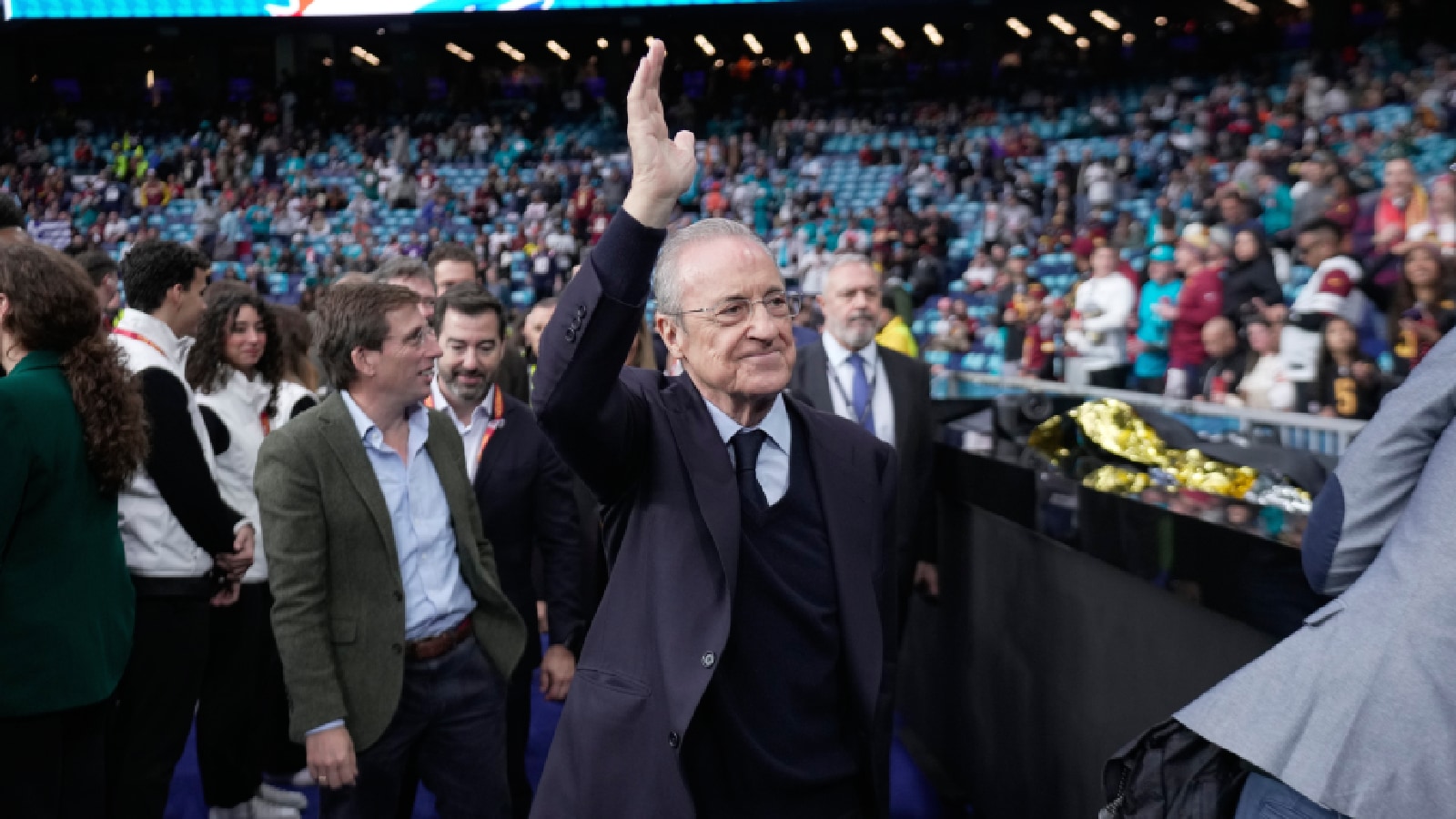
Madrid, Spain – In a potentially seismic shift for one of the world’s most storied football clubs, Real Madrid is considering opening itself up to external investment. Club President Florentino Perez announced on Sunday that he will propose a change to the club’s statutes that would allow for the sale of a minority stake to outside investors.
Speaking at the club’s annual meeting, Perez stated that the proposal would be put to a vote by Real Madrid’s members at an extraordinary general meeting in the near future. This move would require a significant alteration to the club’s long-standing ownership model, which, like its Spanish rivals FC Barcelona, Athletic Bilbao, and Osasuna, relies on membership.




Despite the potential for outside investment, Perez emphasized that the current ownership-by-members structure would remain fundamentally intact. He argued that allowing external investors to acquire a stake of around 5% would enhance the value of membership, making it “a real and tangible value.”
“If someone is willing to invest significant amounts of money for a symbolic stake, this is the greatest demonstration of Real Madrid’s value,” Perez told the assembled members. His hour-long speech was frequently punctuated by applause, indicating a degree of support for the controversial proposal.

Perez outlined specific criteria for any potential investors, stressing that they “must respect our values, contribute to the growth of the club, and help us to protect our assets from external attacks.” The emphasis on protecting the club from “external attacks” hints at the ongoing power struggles within European football, particularly concerning the proposed European Super League.
The move comes as other Spanish clubs are also exploring external investment. U.S. fund Apollo recently became the majority shareholder in Atletico Madrid, demonstrating the growing interest of private equity firms in the sport’s stable revenue streams.




Real Madrid boasts impressive financial figures. According to Deloitte, it is the only football club in the world to have recorded revenues exceeding €1 billion. For the 2024/2025 season, revenue reached €1.19 billion, with net revenue after tax increasing by 56% to €24.3 million. Forbes estimates the club’s value at $6.75 billion, making it the most valuable football club globally.
However, Perez has repeatedly argued that the membership model puts Real Madrid at a disadvantage when competing with clubs backed by wealthy private owners or sovereign wealth funds, such as Paris St Germain, Manchester City, and Chelsea. These clubs have seemingly limitless resources in the transfer market, creating an uneven playing field.
Real Madrid has been a leading proponent of the European Super League, a controversial project aimed at reshaping European football and generating greater revenue for participating clubs. Perez believes that the Super League is essential for Real Madrid to remain competitive in the long term.
At last year’s annual meeting, Perez first floated the idea of a referendum on reorganizing the club’s ownership structure, emphasizing the need to “protect us from threats we face” while maintaining member ownership. The current proposal appears to be a more concrete step towards that goal.
Under Real Madrid’s bylaws, a change to the statutes requires an extraordinary meeting and a vote by the members. The club already has existing deals with U.S. private equity firms. In 2022, a deal was struck with Sixth Street, providing Real Madrid with €360 million in exchange for rights to develop and operate new businesses at the Santiago Bernabeu stadium over a 20-year period.
The potential introduction of external investors marks a pivotal moment in Real Madrid’s history. While Perez insists that the club’s core values and member ownership will be preserved, the move raises questions about the future direction of the club and the increasing influence of private equity in European football.