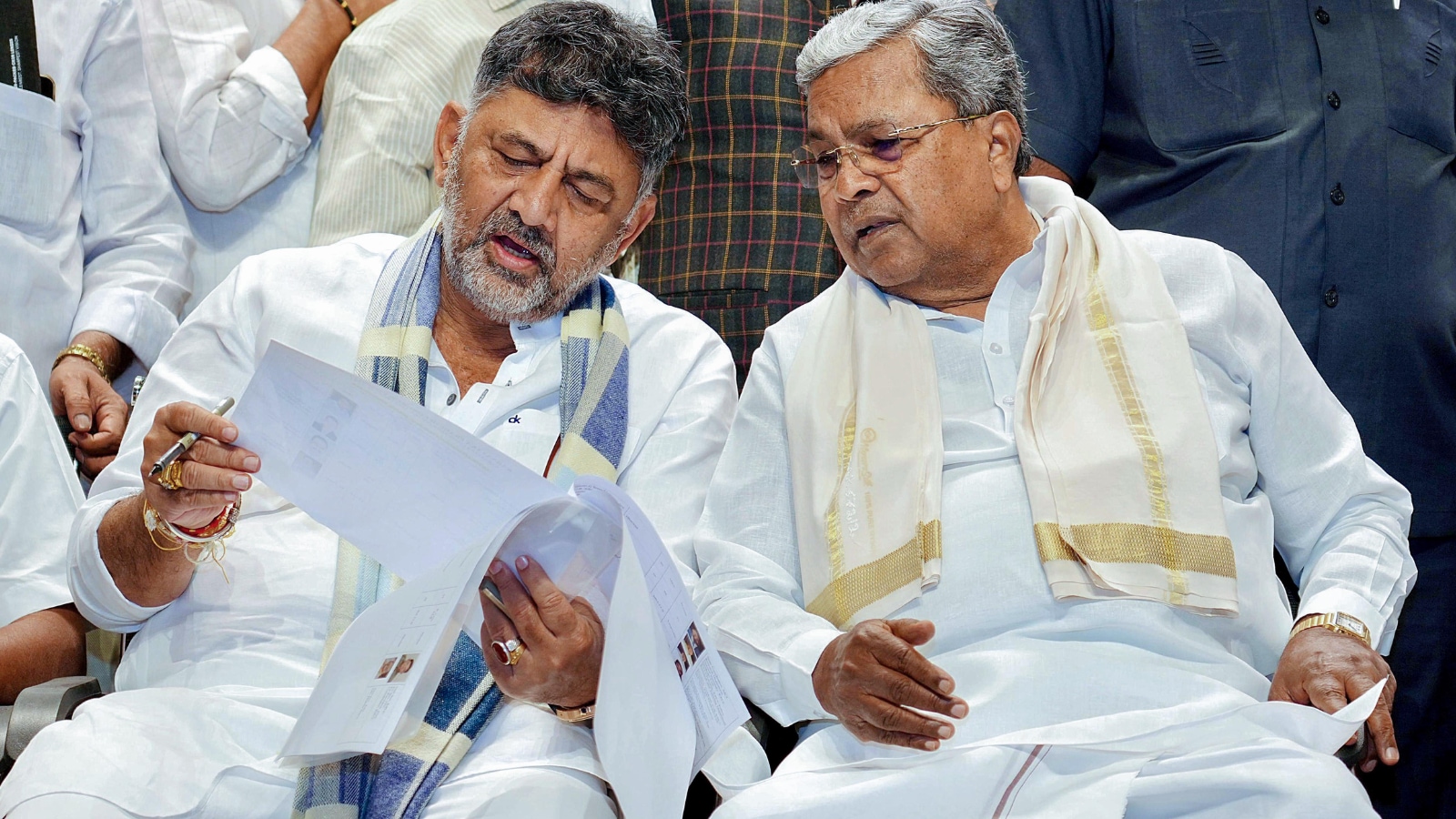
Bengaluru, India – The Indian National Congress (INC) is facing renewed internal friction within its Karnataka state government, as Chief Minister Siddaramaiah and Deputy Chief Minister D.K. Shivakumar vie for power. This comes as the government completes half of its five-year term, sparking speculation about a potential leadership change.
Sources within the Congress party reveal that Siddaramaiah has been pushing for a Cabinet reshuffle, a move that has met resistance from Shivakumar’s camp. Shivakumar, who also serves as the state Congress president, reportedly insists that any reshuffle must be accompanied by a change in the Chief Minister’s position. His argument is that a reshuffle without a leadership change would signal Siddaramaiah’s continued tenure, effectively diminishing Shivakumar’s chances of assuming the top post.




The simmering tensions were further highlighted by a recent visit of several Karnataka Congress MLAs, loyal to Shivakumar, to Delhi. The legislators reportedly sought to advocate for Shivakumar’s claim to the Chief Minister’s office. This move, however, is seen by some as an indication that the Congress high command is reluctant to disrupt the existing power structure in Karnataka, particularly after the party’s recent setback in the Bihar elections.
Following the Bihar results, Congress President Mallikarjun Kharge held meetings with both Siddaramaiah and Shivakumar, urging them to exercise patience regarding their respective ambitions. The high command has reportedly asked Siddaramaiah to postpone his proposed Cabinet reshuffle, while simultaneously stalling Shivakumar’s push for the Chief Minister’s chair. A long-standing demand from Siddaramaiah’s supporters for a new state president, potentially a Chief Ministerial candidate for the 2028 state elections, has also been put on hold due to Shivakumar’s unwillingness to relinquish his current position.

The Congress leadership is believed to be wary of triggering political instability in Karnataka, especially with crucial elections looming in 2026, including the Kerala polls, which are of particular importance to the party. While Shivakumar has publicly denied orchestrating the Delhi visit of his supporters, he is known to be a powerful figure within the party, controlling key portfolios such as Bengaluru development and water resources. He also wields considerable influence as the state Congress president.
In contrast, Siddaramaiah enjoys a broad base of support among legislators and the public, owing to his image as a socialist leader championing the interests of OBCs, Dalits, and minorities. Despite not being personally wealthy, he has the backing of several prominent ministers within his Cabinet.




Siddaramaiah himself has confirmed the high command’s message of maintaining the status quo. He stated that he had informed the leadership of his intention to conduct a Cabinet reshuffle after the government completed two and a half years in office, triggering the current wave of speculation. The matter is now reportedly under consideration by Rahul Gandhi, following discussions with Kharge.
The core of the issue lies in Shivakumar’s apprehension that a mid-term reshuffle without a leadership change would solidify Siddaramaiah’s position for the remainder of the term. Siddaramaiah, however, has dismissed any talk of a leadership change, asserting that the Congress has a mandate to govern for the full five years.
Despite appearing outwardly composed, Shivakumar’s actions, particularly through his supporters, suggest a degree of anxiety regarding his prospects of becoming Chief Minister. He has publicly stated that he is not in a hurry to occupy the post but has also hinted at a willingness to step down as state Congress chief, although without explicitly linking it to his Chief Ministerial aspirations.
Adding another layer to the complexity, a group of senior leaders from Dalit and tribal communities, largely aligned with Siddaramaiah, recently held a dinner meeting, reportedly to discuss demands for more Deputy Chief Ministers and a change in the state Congress president. This highlights the diverse factions and competing interests within the Karnataka Congress.
Amidst the ongoing power struggle, the Congress general secretary in charge of Karnataka, Randeep Singh Surjewala, has cautioned party MLAs against disrupting governance with public statements on the leadership issue. He accused the opposition BJP and a section of the media of orchestrating a campaign to destabilize the Congress government in Karnataka.
The coming weeks will be crucial in determining the direction of the Karnataka Congress and whether the high command can effectively manage the competing ambitions of its key leaders.