Jammu, India – A controversy has erupted over the admission list for the Shri Mata Vaishnodevi Devi Institute of Medical Excellence in Jammu and Kashmir, with Hindu organizations demanding its cancellation. The dispute centers on the composition of the incoming class, where 42 out of 50 MBBS seats were allocated to Muslim students, raising concerns among some Hindu groups who believe it unfairly favors one religious community.
The issue has galvanized around 60 organizations in the Jammu region, uniting them under the banner of the Sanatan Dharma Sabha. This umbrella outfit mirrors a similar group that spearheaded the 2008 Amarnath land row agitation, a period of intense social and political unrest that deepened the divide between the Jammu and Kashmir provinces.




The Sanatan Dharma Sabha, led by convenor and retired Army Colonel Sukhbir Singh Mankotia and president Purushottam Dadhichi, comprises various social, community, business, and religious organizations. Dadhichi stated that the widespread opposition to the admission list stems from the belief that the high proportion of Muslim students admitted to the Vaishnodevi institute is unjust, given that the college was established with donations to the Hindu shrine.
The matter was initially raised by RSS affiliates, including the BJP, VHP, and Bajrang Dal, who argued that the allocation of a significant portion of seats to Muslim students was unfair, considering the institute’s funding source. This has ignited a wider debate about merit, religious representation, and the role of donations in shaping admission policies.

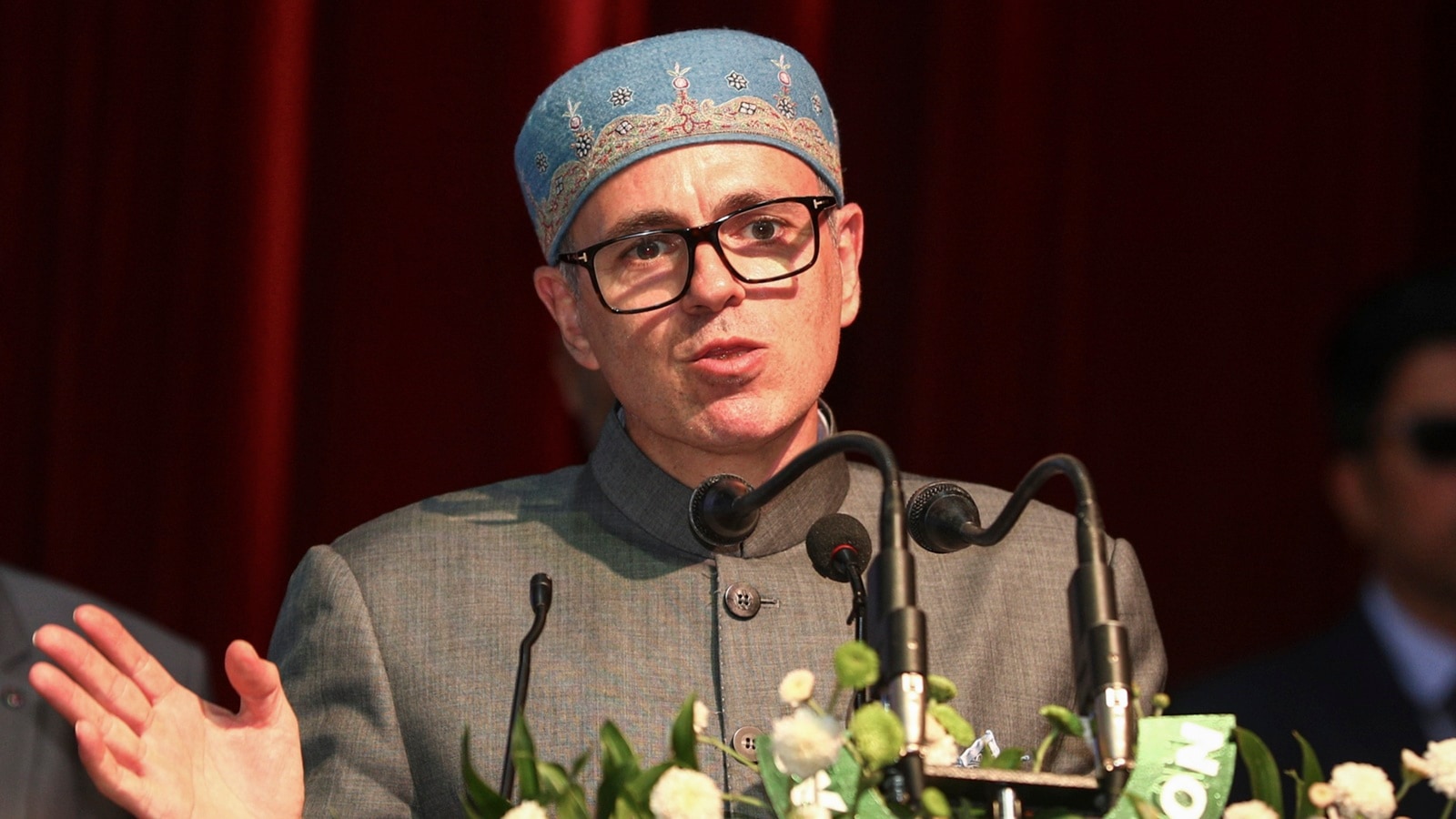
In response to the growing protests, Chief Minister Omar Abdullah addressed the media, dismissing the concerns as baseless. He emphasized that the Shri Mata Vaishno Devi University Act, which facilitated the establishment of the institute, clearly stipulated that admissions would be based solely on merit. Abdullah questioned the logic of excluding students based on religion, stating that the act explicitly prioritized merit over religious affiliation. He challenged the protesters to seek permission from the Supreme Court if they wished to deviate from this principle.
Abdullah further cautioned against applying religious criteria to decision-making, warning that it could lead to discriminatory practices in other areas, such as social welfare programs and law enforcement. He questioned whether religion would be a determining factor at ration depots or influence police officers’ duties.




The 2008 Amarnath land row saw the Sanatan Hindu Sabha unite various social, religious, trade, and community organizations under the Amarnath Sangharsh Samiti, protesting the Congress-PDP coalition government’s decision to revoke land allocated to the Shri Amarnath Shrine Board for pilgrims. The controversy led to the collapse of the government, with the PDP questioning the initial land allocation.
Leela Karan Sharma, the VHP president in 2008, stated that the recent meeting regarding the Vaishnodevi institute resulted in a consensus to launch the Shri Mata Vaishno Devi Sangharsh Samiti to address the issue. The group aims to provide comprehensive support to the newly formed organization.
Lieutenant Governor Manoj Sinha has received a memorandum from BJP legislators seeking the cancellation of the admission process. Sunil Sharma, the Leader of the Opposition who led the delegation, asserted that the admission of a disproportionate number of students from a particular community to a college funded by pilgrims’ donations is unacceptable. He claimed that the L-G assured them of appropriate action.
BJP Udhampur MLA R S Pathania has proposed amendments to the Shrine Board Act and the Shri Mata Vaishno Devi Shrine Board University Act, arguing that institutions built with donations from Mata Vaishnodevi Devi shrine pilgrims should operate in accordance with the ethos of the Shri Mata Vaishnodevi Devi Shrine Board.
The controversy arose after the J&K Board of Professional Entrance Examinations released a list of 50 candidates for the Vaishnodevi institute, comprising 42 Muslims from Kashmir and eight Hindus from Jammu. The admissions were conducted according to established rules and the NEET merit list, with the institute lacking minority status.
Sources indicate that the trend of Muslim students outnumbering Hindu students in medical admissions is not limited to the Vaishnodevi institute but is prevalent across medical colleges in the Union Territory. Students from Jammu are reportedly more inclined towards engineering fields.
Chief Minister Abdullah defended the admissions process, reiterating the secular principles enshrined in the Indian Constitution. He challenged the BJP to amend the Constitution if they wished to dismantle secularism. He also defended the students who earned their admission through hard work and merit, encouraging those who were not selected to strive for success in future examinations.
The situation remains tense, with Hindu organizations continuing to press for the cancellation of the admission list, while the government insists on upholding the principles of merit and secularism. The controversy highlights the complex interplay of religion, politics, and education in the sensitive region of Jammu and Kashmir.